Lead with Safety: 5 Ways to Get it Done
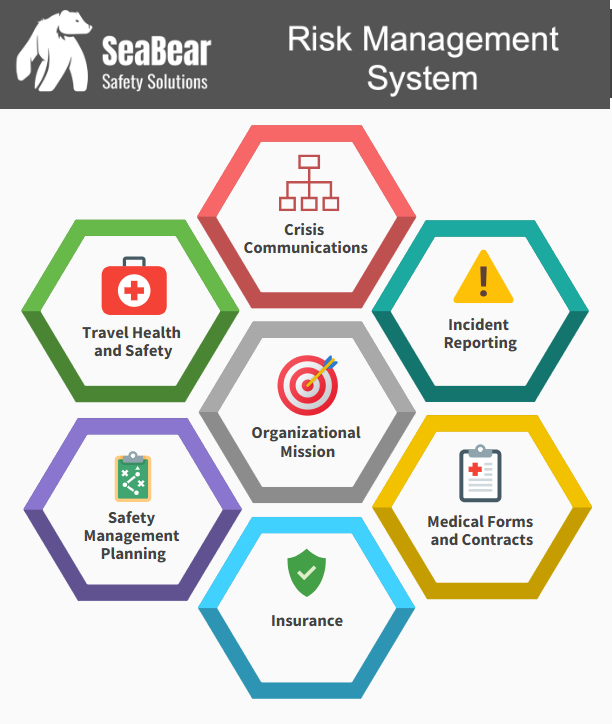
Risk Management System
You are a manager tasked with managing safety in your department and programs. You are a risk director responsible for establishing systems, policy, incident and emergency management and risk analytics. You are a field manager that needs to protect your people across risky work, events and activities. You are an executive that needs to administrate stable operations that drive a strategic plan that satisfies the board and attracts investment and partners. You are an HR manager that needs to train and support staff with clear expectations and policy. You are an IT Director that needs to implement security controls across your digital engagement. You are a facility manager in charge of keeping workplaces healthy and safe for all.
You need to manage safety, security, and emergency preparedness in your workplace. Likely you have too small a budget, not enough stated or recognized authority, not enough staff support, outdated platforms and systems, and heaps of cultural resistance. You can’t get any meaningful face time with decision-makers to make real progress but if something goes wrong you are expected to have a solution ready. The risk and safety components of your role always get smothered by other priorities that everyone else thinks are more pressing. Either no one had the role before you so there is no precedent and no one pays attention or thinks risk and safety planning is very important or necessary, or the person before you was checked out or just said ‘No’ to everything so teams learned to stop asking. You have a massive scope of work and responsibility and inadequate means to accomplish the goal.
Sound familiar? Many of us have been in this position, and it takes a range of effort, coordination, partners, collaboration, consistency, luck, and sheer will to create and integrate quality, intentional risk and safety systems into your operations and workforce. It is hard, and doable, and it is a big topic - but here are a few key tenets to keep in mind as you navigate this in your role.
1. Create Metrics that Matter.
Data, reporting, risk analytics, investigation findings and dashboards are your special sauce but can work both for and against your goals. Keep your metrics accurate, practical, and relevant. Too complex and no one reads it, too simple and it loses credibility - it is an unfair balance but you need to find it. Make sure to adapt and tailor the style and delivery to the particular culture of your organization. Dense, technical data may be a good match for some audiences, but might make sure others never pay attention to your reporting again. Consider how sophisticated and mature your safety culture is, and match the tone and style that works for your staff. In order to change the culture, you need to start where they are and support their good education so they can be conversant in the thinking and practice of risk management. Be creative, use infographics and video tools, keep it simple and be selective about how you deliver and shape your data to tell the safety story that you need to.
2. Stop Leading with Losses.
Traditionally safety managers focus on what is going wrong, the frequency and severity of accidents and incidents, and lean heavily on the negative outcomes and outstanding risk facing the organization. This is only half the story. A fulsome approach incorporates what is going wrong and what is going right, asks what is happening when nothing is happening, assumes dynamic systems have multiple contributing factors and seeks out organizational behaviors that lead to safe and successful programs. Every workplace has lots of both positive and negative actions all the time. Since a healthy Risk Management System is built on the holistic scope of operational performance, you need to tell a complete story. You will find you will learn as much if not more from what is going well, and how those learnings can influence overcoming your deficiencies. Push positive findings and outcomes, not just system breaks and incidents. Don’t become the broken record - after a while, no one listens to the hall monitor. Show safety as a dynamic system of inputs and outcomes inextricably linked to core business choices.
3. Risk is Business, Business is Risk.
Safety is often kept on the fringe and treated as a mandatory compliance nuisance and not a core business practice - be different. Your systems and metrics likely hold the keys to operational efficiency, profit and loss, market competition, and cultural confidence across the workforce. All business choices involve risk and your skillset makes you primed to play a crucial role at infusing this perspective throughout operational planning. When I first started as an organization’s first dedicated safety staff, my investigation methodology and activity planning process was designed for managing safety for managers planning their programs. Because they were useful, practical, and organized common needs into a ready-made planning template, it became the gold standard for managing most operations simply because it worked best. It solved a problem, was universally applicable, created efficiency and saved time, and coordinated a usual process across departments. Once adopted as a standard practice, it could also be expanded and adapted to flex with new needs growing programs. Create relevant, reliable resources that work well and support departments and give them away and you infuse risk and safety thinking, practice and awareness throughout the organization. Note - this sounds good and is also really difficult and time consuming, and you likely will have to chip away at this depending on how crusted your organization is. But it works and is worth it.
4. Be Everywhere.
Risk is everywhere, so your talents are always relevant. When done right, safety can be the backstage pass into all things, allowing you to uniquely straddle departments, collaborate across teams and coordinate systems. Your voice can serve as an advisory benchmark for maintaining standards, thinking logically, and defining acceptable risks. This isn’t about gaining positional power - although pursue it if helpful - but awesome for creating risk thinking as a normalized practice everywhere. Your influence can empower staff to be risk managers in the scope of their own role, and for influencing consistent, intentional planning and decision making.
5. Be Reliable.
Outwork people, be extremely available, answer the phone at wee hours and always be there for answers or to help people find them. Do this for incidents big and small, smart questions, dumb questions, and everything in-between. Safety is personal and relational - so build relationships, and establish trust. The small and medium size stuff will build your street cred and trust and then be easier to be seen as an ally when you have to sell a bigger lift and operational change later. Once you have trust the more difficult compromising decisions will be easier - people will engage and know your good intentions, and remember how you supported them consistently. This really works. It takes time and some groups more so than others, but energy spent here will pay out for your role and initiatives later.
This is just the beginning, the practice of building functional Risk and Safety practice in an organization is a grind and an art form. These five actions can help you get there. Every role and organization is a bit different and needs unique things along their own timeline. SeaBear Safety Solutions applies practical methods to support finding your business’s best risk and safety solutions, customized for you. Our goal is to help you create systems that enable you to be self-sufficient and resilient against the operational challenges and risk landscape your business faces.
By Todd Duncan, Owner/Principal Consultant, SeaBear Safety Solutions