Henokiens: Future-Proof Your Business Safety

Houshi Ryokan
The Henokiens Association is a group of companies that have been around for at least 200 years. Founded in France in 1981, Les Hénokiens was named after the biblical character Hénoch(Enoch) who according to tradition, lived 365 years. Today there are over 50 members representing heavy industry, publishing, hospitality, food, and manufacturing. Companies must be family owned, be in good financial health, and have a commitment to family succession and longevity. The goal of the association is to recognize and preserve the continuity and endurance of the businesses, promote their products and service quality, acknowledge the traditions and legacy of each member and serve as a landmark that promotes the shared values and traits needed to survive in an increasingly changing world.
Examples of some of the Henokiens members are Baretta, the Italian firearms maker, founded in 1562, and still operating from the same valley they mined iron half a millenia ago. Or Peugeot, where in 1810 two brothers who started producing steel in their father’s cereal mill in France, to make tools, then bicycles, then cars. Or Houshi Ryokan, a Japanese family inn founded in 718 in the Ishikawa Prefecture, that has been caring for guests for 46 generations.
All of the Henokiens businesses have weathered considerable change over the course of time. The world in which their business began is totally different from the one they operate in today. The evolving partnerships, social expectations, technology, scale of marketplace, compliance landscape and operating environments across centuries is a mind-bending thing. It is an incredible achievement to remain relevant across such a length of time.

Peugeot
It is common these days to talk about unprecedented times and current events. While true, it is good to remember it has always been like this - communities, nations, and businesses navigating the complexities of the moment. The past is behind us, the future uncertain, the present feels the most real. The truth is that the ability to remain connected to all three is an important quality to navigate the moment, have the depth of perspective to make both timely and enduring decisions, and evolve while preserving your core mission and character. There are important lessons to be had from the best traits of businesses that have weathered all manner of disruption, financial hardship, wars, social unrest, geopolitical change, and environmental and technological upheaval.
The throughline? Their ability to manage risk. Managing their preparedness, operating systems, and organizational readiness has allowed each 200+ year old business to navigate conditions, see around corners, adapt, and create resilience in the face of so much change.

Baretta
While change has always been a constant, if one thing is different about today’s business conditions, it is the speed of that change. The dynamism of the operating environment is unique now that it demands managers work at a new speed of business and pay attention to the past, present and future all at once. It has never been more critical for businesses to take a proactive approach to risk and ensure their operating strategies are not weighed down by tunnel vision or getting caught in a single issue or moment.
If your business can make this adjustment, then you can improve your risk posture and ensure to be better placed to take advantage of the many opportunities the current global risk landscape is creating.
Plan for Disruption
Don’t be surprised by disaster, count on it. Bake it into your strategic plan, create operational failsafes and backups so you can be ready for the inevitable disruption that comes. Workshop the types of disruptions and map out possible and likely scenarios that may impact your business. Don’t plan on waiting out the turbulence - but thriving in it. Developing a solid business continuity plan and updating it regularly will ensure you have a roadmap to navigate the next big challenge.
Embrace Ambiguity
Real incidents and problems never follow a plan, and no plan is perfect. Recognize that you will most often have to make crucial decisions without all the information, amidst changing conditions, faced with hard trade-offs. Welcome to risk management! The more comfortable your leadership and management teams are in this space, the better you can keep working. Rarely is a single decision the pivotal choice - but more likely a series of small decisions and processes that allow you to be nimble and make corrections as you go.

Houshi Ryokan
Think Forward
The present moment and near future dominate our business lives. Take the time to forecast, to model out what might be. Not only is the exercise healthy for gaming the future but it will both test your systems and approach, and also build some creative thinking into what may come your way. A failure of imagination is often what gets businesses the hardest - when they just didn’t think that disruption could happen to them.
Create Adaptive Tools
A static organizational structure is stuck in the present and responds poorly. Regularly update your hierarchies and teams, question if they still serve as they should, and lean into practical tools like communication platforms and incident reporting dashboards. Real-time information and data management is cheap and easy now, use it. And don’t be afraid to recognize the limits of your expertise and enlist outside help to add to your capacity, advise, and bring additional insights to your teams.
Stay Flexible
Plan, and prepare as much as possible - but don’t get too hooked on the plan. Energy crisis, tariffs, geopolitical shifts, market changes, supply chain disruptions don’t care about your well-laid plans and be intentional about building in variability, flexibility, and discretion across your planning. Systems are great, but they need to adapt to each incident, issue, or environment. Try to balance relying on your established frameworks, while being flexible to needed change.
Infuse Safety into All Operations
Safety and Risk Management suffer when relegated to a few staff, formal roles are not present in job descriptions, or resources sit on a dusty shelf with the other heavy manuals, only to be brought out when it is too late. By infusing safety, risk and emergency preparedness into your normal operations across your organization, you integrate and normalize risk thinking into everyday work. This builds familiarization, capability, and culture. Simply asking ‘what are the safety and security considerations of this decision’ across everyday meetings goes a long way. Plan, train, practice, review, revise.
The ultimate benchmark for business is consistently delivering the highest quality products and services. This gets harder the longer you are in business, and the world we live in is increasingly less predictable. A professional approach to risk management across your business operations will enable you to gain a better perspective for sharp decision making that maintains your traditions, is relevant to the moment, and leans into the future. Elevating your risk management systems will empower making decisions as if your business will be around for 200 years.
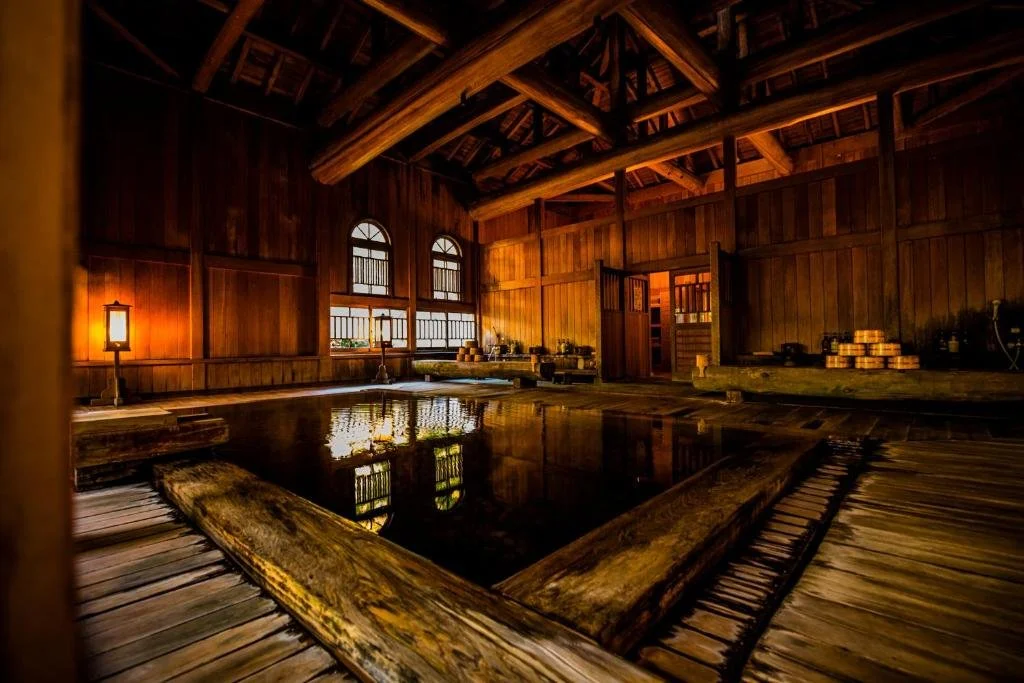
Houshi Ryokan
By Todd Duncan, Owner/Principal Consultant, SeaBear Safety Solutions